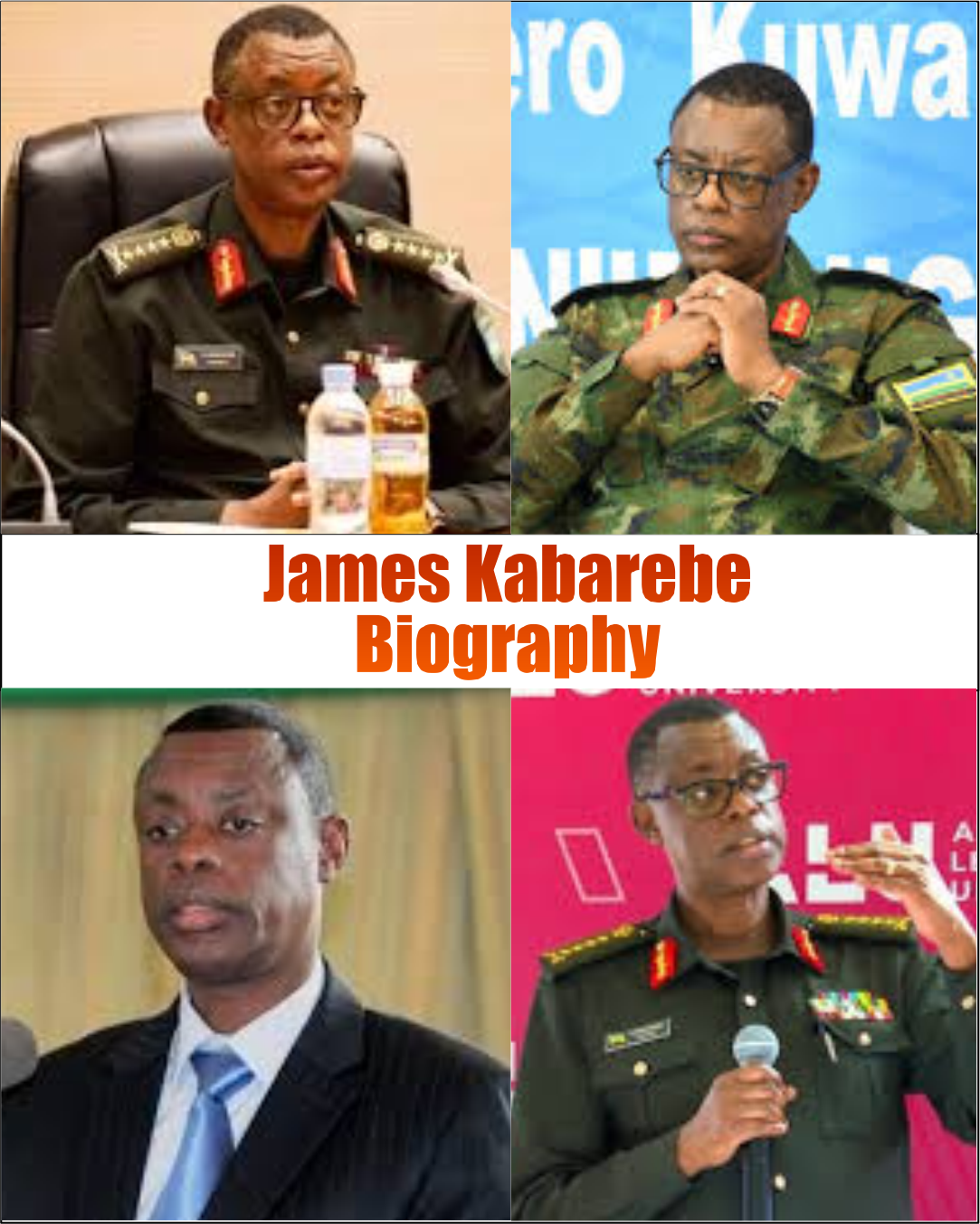
James Kabarebe Biography
The James Kabarebe Biography: The Strategist Who Shaped Central Africa’s Power Dynamics
Explore how James Kabarebe rose through the Rwandan Patriotic Front, led cross-border military operations, and became a key figure in regional security.
Some soldiers defend borders.
Others cross them—because the conflict demands it.
James Kabarebe built his reputation in the second category.
His career was not confined to one battlefield, one country, or one mission.
It stretched across borders, into some of the most complex and controversial conflicts in Central Africa.
And at every stage, his role was defined by strategy under pressure.
James Kabarebe Biography
| Full Name | James Kabarebe |
|---|---|
| Date of Birth | 1959 |
| Place of Birth | Rwanda |
| Nationality | Rwandan |
| Profession | Military Officer, Politician |
| Known For | Former Minister of Defence of Rwanda; Senior Military Leader |
| Education | Military Training Institutions |
| Net Worth | Not publicly disclosed |
| Marital Status | Not publicly disclosed |
See also: Njeri Rionge Biography – The Serial Entrepreneur Who Quietly Built Africa Digital Future
Early Life and Enlistment Story
James Kabarebe’s early life was shaped by displacement and regional instability.
Like many Rwandans of his generation, his formative years were influenced by exile and political tension.
He later joined the Rwandan Patriotic Front, a force composed largely of exiled Rwandans seeking to return and reshape their country.
Military training within the RPF was:
- Intense
- Purpose-driven
- Closely tied to political objectives
This environment produced commanders who were both soldiers and strategists.
Major Engagements: From Rwanda to Congo
Kabarebe played a significant role in the Rwandan Civil War, which ultimately led to a major shift in Rwanda’s political and military structure.
However, his influence extended beyond Rwanda.
He later became deeply involved in the Second Congo War, one of the largest conflicts in African history.
This war involved:
- Multiple nations
- Numerous armed groups
- Complex alliances and rivalries
Kabarebe’s role placed him at the center of strategic operations across the region.
Battlefield Strategy and Command
Kabarebe became known for his strategic approach to warfare.
Rather than relying solely on direct confrontation, his command style emphasized:
- Coordinated operations
- Tactical positioning
- Rapid movement across territories
In conflicts where geography and alliances constantly shifted, strategy often determined survival.
His ability to operate within such environments contributed to his rise in military leadership.
Survival in Multi-Front Conflicts
Fighting across multiple regions presents challenges beyond traditional warfare.
Kabarebe’s experience included:
- Managing operations in unfamiliar terrain
- Coordinating forces across borders
- Responding to evolving threats from multiple directions
Survival in such contexts depends on:
- Intelligence
- Adaptability
- Strong command structures
Leadership Under Political and Military Pressure
Kabarebe’s leadership extended into areas where military operations intersected with political strategy.
This created a dual pressure:
- Achieving military objectives
- Aligning with broader national and regional goals
Such roles require:
- High-level decision-making
- Constant coordination
- Awareness of both battlefield and diplomatic consequences
Psychological Weight of Prolonged Conflict
Extended involvement in large-scale conflicts carries significant psychological strain.
For commanders like Kabarebe, this includes:
- Continuous exposure to high-stakes environments
- Responsibility for large-scale operations
- The complexity of navigating both military and political expectations
These factors shape long-term leadership perspective.
Medals, Honors, and Recognition
Kabarebe has held senior military and defense positions, reflecting recognition of his experience and strategic role.
His career progression into top defense leadership positions highlights institutional trust in his capabilities.
Controversies and Complex Narratives
Kabarebe’s involvement in regional conflicts has not been without controversy.
Operations in the Congo wars, in particular, have been subject to:
- International scrutiny
- Political debate
- Differing interpretations of events
Such complexity is common in conflicts involving multiple actors and interests.
His story reflects both influence and the challenges of operating in such environments.
Life After Active Combat Roles
Kabarebe transitioned from active battlefield command into senior defense leadership roles.
This phase involved:
- Strategic planning at national level
- Oversight of military structures
- Continued influence on security policy
It marked a shift from tactical execution to institutional leadership.
Untold Stories from the Frontlines
Much of Kabarebe’s operational history remains partially documented.
These include:
- Internal decision-making processes
- Tactical negotiations
- High-risk moments not publicly recorded
Such gaps are typical in complex, multi-national conflicts.
Legacy and Regional Impact
James Kabarebe’s legacy is tied to the transformation of Rwanda’s military and its role in regional security.
He represents:
- The evolution of post-conflict military leadership
- The influence of strategy in modern African warfare
- The intersection of national defense and regional power dynamics
His impact extends beyond a single country.
Memorable Closing
James Kabarebe did not operate within simple conflicts.
He moved through layered wars—where strategy mattered as much as strength.
His career reflects a different kind of soldier.
One shaped not just by combat—but by complexity.
Because in modern warfare, the battlefield is no longer just a place.
It is a network of decisions, alliances, and consequences.
And Kabarebe learned how to navigate all of it.
Frequently Asked Questions
What role has James Kabarebe played in Rwanda’s government?
James Kabarebe has served as Rwanda’s Minister of Defence and has held several high-level positions within the country’s security and government structure.
What is James Kabarebe’s military background?
James Kabarebe is a senior Rwandan military officer who played a significant role in the Rwandan Patriotic Army and later in national defense leadership.
What is James Kabarebe known for?
James Kabarebe is known for his influence in Rwanda’s military and political landscape, including his involvement in regional security matters in Central and East Africa.
Has James Kabarebe held roles outside Rwanda?
Yes, James Kabarebe has been involved in regional military affairs, including roles connected to conflicts and security operations in neighboring countries.
Is James Kabarebe still active in public service?
James Kabarebe has continued to serve in various governmental and advisory roles, remaining an influential figure in Rwanda’s leadership structure.