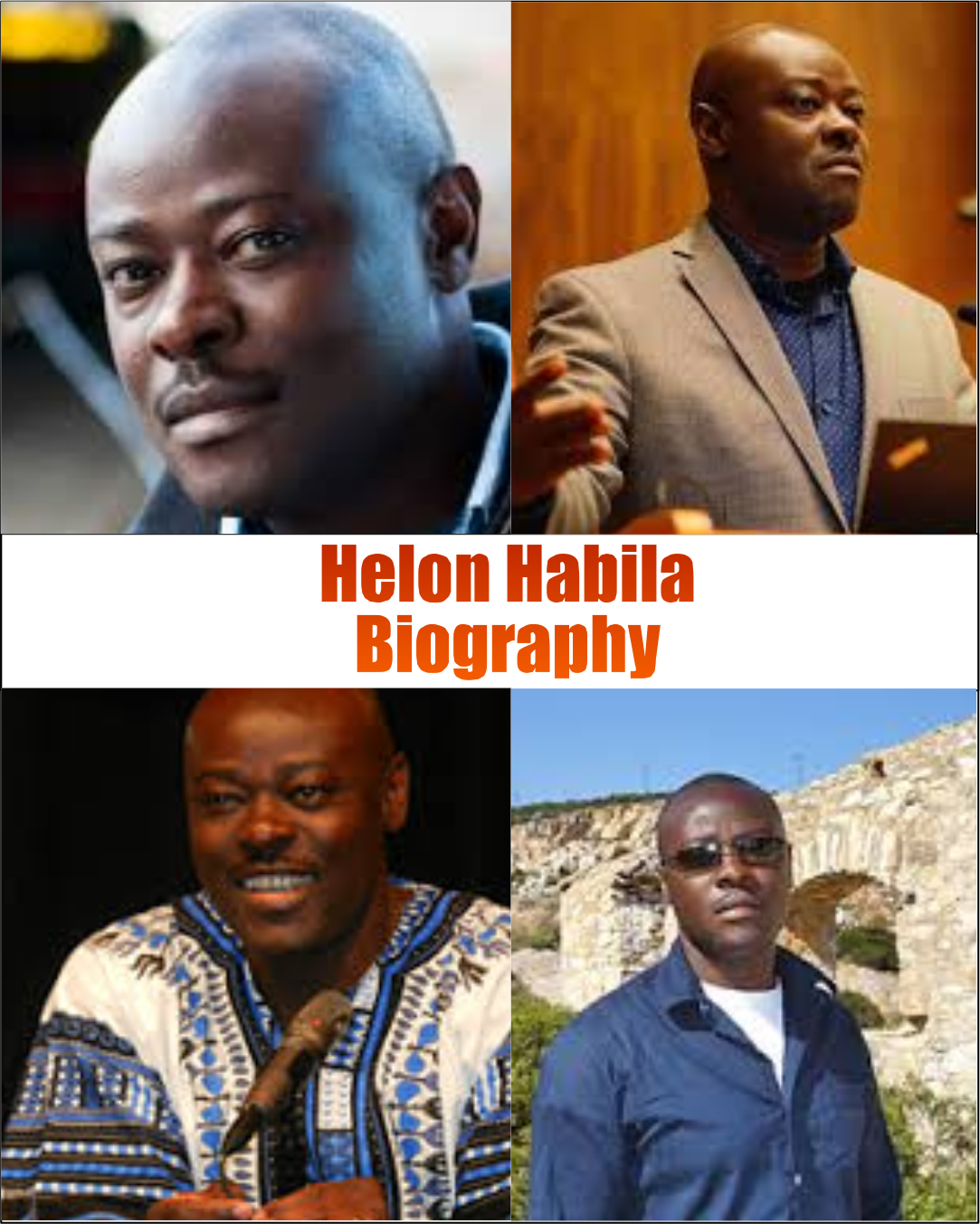
Helon Habila Biography
The Helon Habila Biography: The Writer Who Turned Nigeria’s Silence Into Stories the World Couldn’t Ignore
Discover how Helon Habila rose from a quiet journalist to an internationally acclaimed novelist, using fiction to expose Nigeria’s hidden struggles and human stories.
Some writers tell stories.
Others uncover truths people would rather avoid.
Helon Habila belongs to the second group.
His work doesn’t shout. It doesn’t chase attention. But once you read it, it stays—quietly forcing you to confront realities that are often ignored.
From the dusty classrooms of northern Nigeria to global literary recognition, his journey is not just about writing.
It’s about giving voice to what many would rather leave unspoken.
Helon Habila Biography
| Full Name | Helon Habila |
|---|---|
| Date of Birth | 1967 |
| Place of Birth | Kaltungo, Gombe State, Nigeria |
| Nationality | Nigerian |
| Profession | Writer, Journalist, Academic |
| Known For | Author of Waiting for an Angel and Oil on Water |
| Education | University of Jos |
| Net Worth | Not publicly disclosed |
| Marital Status | Married |
See also: Simon Tiemtoré Biography: The Dealmaker Who Built a Pan-African Empire
The Early Years That Shaped a Writer
Helon Habila’s story begins in Kaltungo, in northeastern Nigeria—a region far removed from the literary spotlight.
Growing up, his exposure to storytelling wasn’t shaped by luxury or literary circles, but by lived experience—community, struggle, and observation.
He later studied English at the University of Jos, where his relationship with writing deepened.
But his first real training ground wasn’t fiction.
It was journalism.
Working as a reporter, Habila learned how to observe carefully, write precisely, and most importantly—listen.
This background would later define his style: grounded, patient, and deeply human.
The Breakthrough That Changed Everything
Habila’s turning point came with his debut novel, Waiting for an Angel.
Published in the early 2000s, the book was not just a literary entry—it was a statement.
Set during Nigeria’s military dictatorship, it explored:
- Freedom of expression
- Political repression
- The quiet resilience of ordinary people
The novel didn’t rely on dramatic exaggeration.
Instead, it told its story through subtle tension and emotional realism.
It won the Caine Prize for African Writing (through an earlier version of one of its stories), instantly placing Habila on the global literary map.
But more importantly, it established his identity:
A writer who tells difficult truths without noise.
Writing Style: Quiet, Observant, Uncomfortable
Habila’s writing is not loud.
It doesn’t overwhelm with complex language or dramatic flair.
Instead, it is:
- Measured
- Reflective
- Deeply observant
He writes in a way that makes the reader feel like a witness rather than an audience.
His themes often revolve around:
- Political instability
- Human vulnerability
- Environmental and social injustice
- The everyday lives affected by larger systems
There’s a deliberate restraint in his storytelling—and that restraint is what gives it power.
Where His Stories Come From
Habila’s inspiration is not abstract.
It is rooted in real-world issues—especially those affecting Nigeria.
One of his most defining works, Oil on Water, draws directly from the crisis in the Niger Delta.
Instead of presenting it as headlines, he humanizes it:
- The people caught in the conflict
- The environmental damage
- The emotional cost of survival
His stories are often built from:
- Observed realities
- Journalistic encounters
- National tensions that rarely make it into everyday conversation
Most Recognized Works
While Waiting for an Angel introduced him, Habila’s later works deepened his impact.
Measuring Time expanded his narrative scope, exploring:
- Family
- History
- The passage of time within Nigerian society
Then came Oil on Water, arguably his most internationally recognized novel.
It brought global attention to environmental and human crises in the Niger Delta—without turning the story into propaganda.
Each of his works builds on the last.
Not louder—but deeper.
Controversy Without Noise
Habila is not a controversial writer in the traditional sense.
He does not provoke for attention.
But the subjects he writes about—corruption, oppression, environmental damage—are inherently sensitive.
His work quietly challenges:
- Power structures
- Institutional failures
- Societal complacency
And sometimes, that kind of subtle critique is more powerful than open confrontation.
Recognition and Literary Standing
Beyond the Caine Prize, Habila has received multiple forms of recognition, including international fellowships and academic positions.
He has taught creative writing abroad, contributing to global conversations about African literature.
Yet, he remains relatively underexposed compared to more mainstream names.
Which is precisely what makes his work valuable for readers looking beyond surface-level narratives.
Adaptations and Media Presence
Unlike some contemporary authors, Habila’s works have not been widely adapted into films or television.
This absence is notable.
His stories are cinematic in depth—but perhaps too nuanced for mainstream adaptation trends that favor speed over subtlety.
Net Worth and Public Visibility
Habila’s financial standing is not publicly emphasized or widely documented.
Like many literary authors, his value lies less in commercial visibility and more in intellectual and cultural contribution.
His career reflects a different kind of success:
Influence without noise.
Writing Philosophy: Let the Story Breathe
Habila’s approach to writing is rooted in patience.
He does not rush narratives or force conclusions.
Instead, he allows stories to unfold naturally—often leaving space for interpretation.
His philosophy suggests:
- Writing should reflect truth, not just entertain
- Silence can be as powerful as dialogue
- Stories should respect the complexity of real life
Influence on Readers and Culture
Helon Habila’s impact is subtle but significant.
He has influenced:
- Emerging African writers
- Readers seeking deeper, more reflective narratives
- Conversations around Nigerian socio-political realities
His work contributes to a broader shift:
From storytelling as entertainment
to storytelling as documentation and reflection
Memorable Closing
Helon Habila does not write to impress.
He writes to reveal.
His stories don’t demand attention—but they earn it.
In a world where noise often overshadows meaning, his work stands as a reminder that the most powerful voices are sometimes the quietest.
And once you hear them…
you don’t forget.
Frequently Asked Questions
What type of writing is Helon Habila known for?
Helon Habila is known for literary fiction that explores themes such as politics, conflict, corruption, and everyday life in Nigeria and Africa.
What awards has Helon Habila won?
Helon Habila won the Caine Prize for African Writing and the Commonwealth Writers’ Prize for his debut work Waiting for an Angel.
What are Helon Habila’s most popular books?
Some of Helon Habila’s most popular books include Waiting for an Angel, Measuring Time, and Oil on Water.
What themes does Helon Habila explore in his works?
Helon Habila’s works often focus on social injustice, political struggles, human rights, and the impact of conflict on ordinary people.
Where does Helon Habila currently work?
Helon Habila has worked as a professor of creative writing, including at George Mason University in the United States.