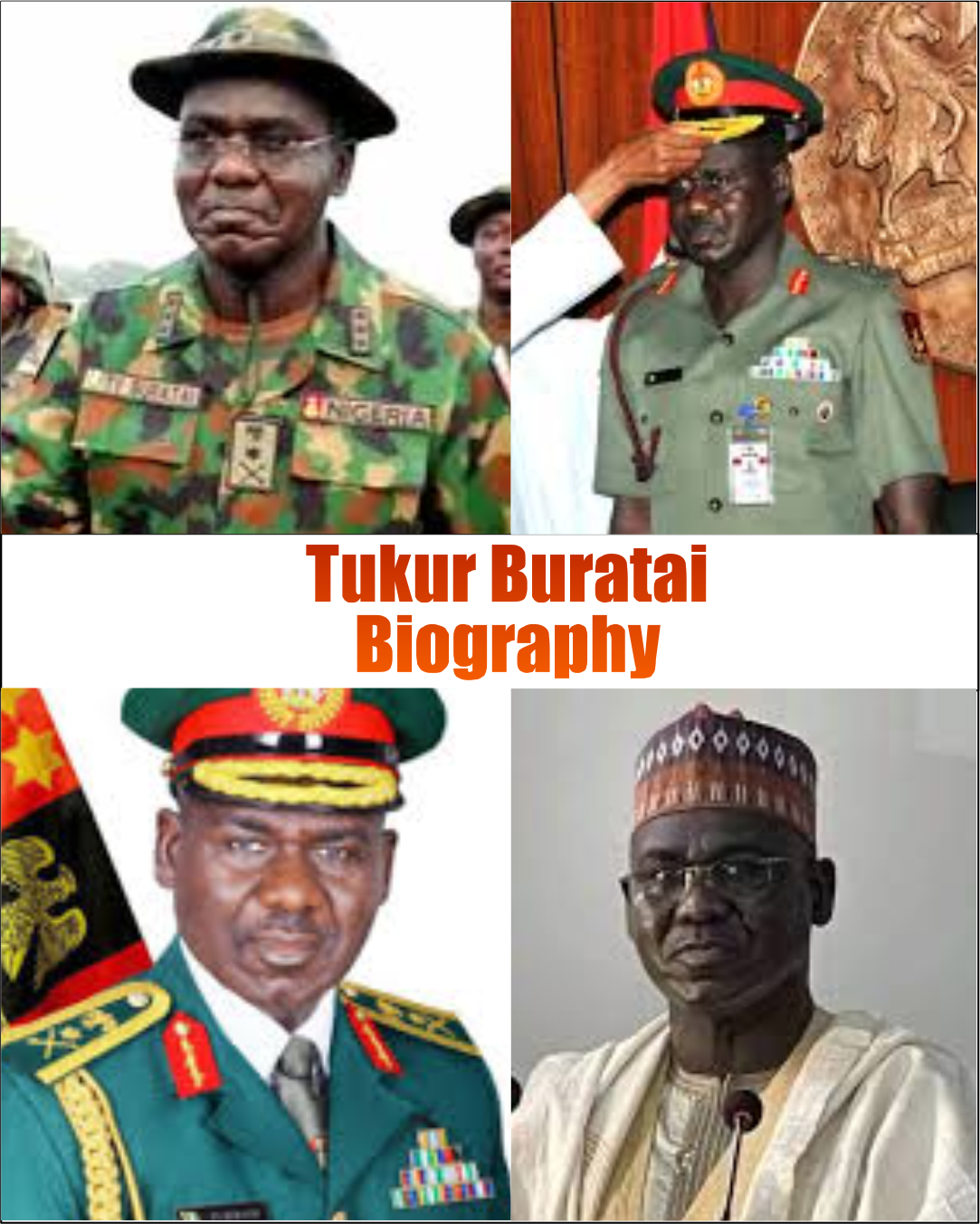
Tukur Buratai Biography
The Tukur Buratai Biography: The Commander Who Led Nigeria Against Insurgency Under Relentless Pressure
Explore how Tukur Buratai rose through Nigeria’s military ranks to lead counterinsurgency operations against Boko Haram amid intense national and battlefield pressure.
Modern warfare is no longer defined by clear battle lines.
It is fought in shadows, in forests, in villages—and often against enemies that do not follow conventional rules.
For Nigeria, that reality became painfully clear during the rise of insurgency in the northeast.
And at the center of that fight stood Tukur Buratai.
A commander tasked with confronting one of the most complex security threats in the country’s history.
Tukur Buratai Biography
| Full Name | Tukur Yusuf Buratai |
|---|---|
| Date of Birth | November 24, 1960 |
| Place of Birth | Buratai, Biu, Borno State, Nigeria |
| Nationality | Nigerian |
| Profession | Military Officer, Diplomat |
| Known For | Former Chief of Army Staff of Nigeria |
| Education | Nigerian Defence Academy; University of Maiduguri |
| Net Worth | Not publicly disclosed |
| Marital Status | Married |
See also: Adebola Williams Biography: The Strategist Who Turned Media Into Power and Shape Politics
Early Life and Enlistment Story
Tukur Buratai’s journey into the military began in Northern Nigeria, where discipline, structure, and service to the nation formed part of the cultural and institutional fabric.
He enrolled in the Nigerian Defence Academy, where his early training focused on:
- Tactical warfare
- Leadership development
- Strategic military thinking
From the beginning, his path was defined by steady progression through the ranks, shaped by both academic grounding and field experience.
Major Engagements: The Fight Against Insurgency
Buratai’s most defining role came during Nigeria’s prolonged battle against Boko Haram.
As Chief of Army Staff, he oversaw operations aimed at:
- Reclaiming territories held by insurgents
- Disrupting militant networks
- Restoring security in affected regions
This was not a conventional war.
It involved:
- Guerrilla tactics
- Civilian-populated conflict zones
- Constant shifts in operational dynamics
His command coincided with some of the most intense phases of the conflict.
Battlefield Realities and Operational Challenges
Fighting an insurgency presents unique difficulties:
- The enemy blends into civilian populations
- Intelligence is often incomplete
- Engagements are unpredictable
Under Buratai’s leadership, the army conducted operations across difficult terrains—forests, rural communities, and border regions.
Maintaining momentum in such conditions required:
- Continuous deployment
- Resource coordination
- Adaptation to evolving threats
Leadership Under Pressure
Buratai’s tenure was marked by intense national scrutiny.
Every military move was watched.
Every setback was amplified.
Leadership in this context required balancing:
- Military objectives
- Public expectations
- Political oversight
He maintained a command style that emphasized:
- Persistence in operations
- Centralized control
- Long-term engagement strategies
Psychological Strain of Prolonged Conflict
Unlike short-term wars, counterinsurgency operations extend over years.
For commanders like Buratai, this meant:
- Continuous exposure to conflict environments
- Managing troop fatigue
- Dealing with the emotional weight of casualties
The psychological burden of leading such a prolonged campaign is significant—often extending beyond visible battlefield outcomes.
Medals, Honors, and Recognition
Buratai received various military honors throughout his career, reflecting his long service and leadership roles within the Nigerian Army.
His appointment as Chief of Army Staff itself represented recognition of his experience and strategic capability.
Controversies and Criticism
Buratai’s leadership period was not without criticism.
Military operations during insurgencies often attract scrutiny regarding:
- Effectiveness
- Human rights concerns
- Operational transparency
Some aspects of the counterinsurgency efforts were debated publicly, reflecting the complexity of fighting asymmetric warfare in civilian environments.
These controversies form part of the broader narrative of his career.
Life After Service
After his tenure as Chief of Army Staff, Buratai transitioned out of active military leadership.
Like many senior officers, his experience positioned him for continued relevance in national and diplomatic contexts.
His post-service life reflects a shift from battlefield command to advisory and strategic roles.
Untold Stories from the Frontlines
Much of the Nigerian counterinsurgency effort remains only partially documented.
Behind official reports are:
- Field-level decisions
- Close encounters
- Moments of uncertainty that shaped operations
These untold elements form the deeper reality of the conflict—one that is often more complex than public narratives suggest.
Legacy and National Impact
Tukur Buratai’s legacy is tied to one of Nigeria’s most defining security challenges.
He represents:
- The struggle against insurgency in West Africa
- The evolution of modern military strategy in the region
- The pressure placed on leadership during prolonged conflict
His role reflects both the achievements and limitations of military solutions in complex security environments.
Memorable Closing
Tukur Buratai’s story is not a simple one.
It is shaped by conflict that had no clear beginning—and no easy end.
By decisions made under pressure.
By a war fought not just with weapons, but with endurance.
And in the ongoing story of Nigeria’s security challenges, his chapter remains one of the most intense.
Because sometimes, leadership is not about quick victories.
It is about staying in the fight when the outcome is uncertain.
Frequently Asked Questions
What role did Tukur Buratai play in the Nigerian Army?
Tukur Buratai served as Nigeria’s Chief of Army Staff from 2015 to 2021, overseeing military operations during critical periods of insurgency.
Where is Tukur Buratai from?
Tukur Buratai is from Buratai town in Biu Local Government Area of Borno State, Nigeria.
What happened after Tukur Buratai left office?
After leaving his role as Chief of Army Staff, Tukur Buratai was appointed as Nigeria’s Ambassador to the Republic of Benin.
What is Tukur Buratai known for in military operations?
Tukur Buratai is known for leading Nigeria’s fight against Boko Haram insurgents and implementing military strategies to counter terrorism in the Northeast.
What is Tukur Buratai’s educational background?
Tukur Buratai attended the Nigerian Defence Academy for his military training and also studied at the University of Maiduguri.