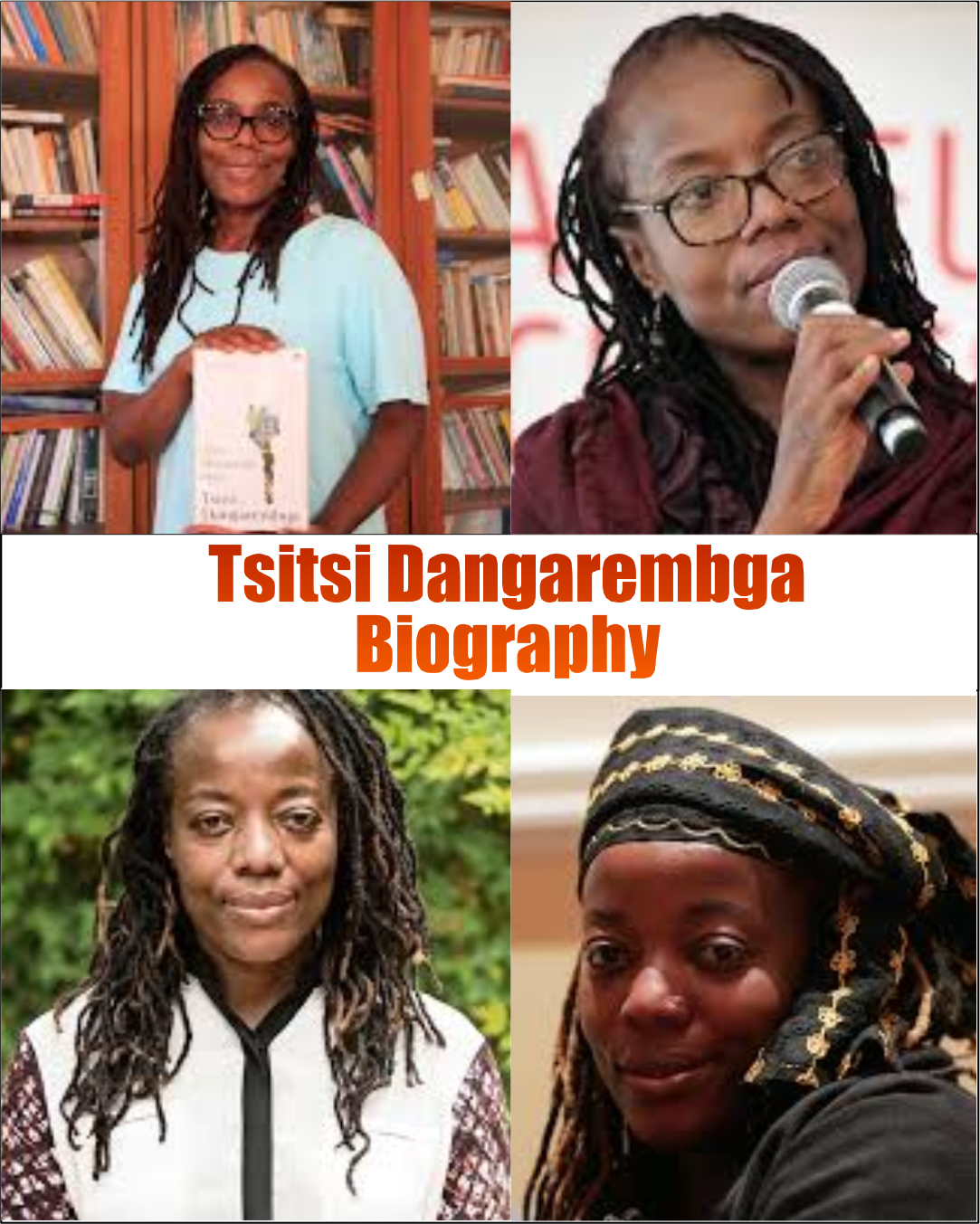
Tsitsi Dangarembga Biography
The Tsitsi Dangarembga Biography: The Author Who Challenged Patriarchy Power and Silence.
Discover how Tsitsi Dangarembga used bold storytelling to confront gender inequality, colonial legacy, and identity in African society.
Some writers follow conversations.
Others start them.
Tsitsi Dangarembga began writing about gender, identity, and power in African society at a time when few were willing to confront those realities openly.
Her stories did not just reflect life.
They questioned it.
And in doing so, they forced readers to confront truths that had long been ignored.
Tsitsi Dangarembga Biography
| Full Name | Tsitsi Dangarembga |
|---|---|
| Date of Birth | February 4, 1959 |
| Place of Birth | Mutoko, Southern Rhodesia (now Zimbabwe) |
| Nationality | Zimbabwean |
| Profession | Writer, Filmmaker, Activist |
| Known For | Author of Nervous Conditions |
| Education | University of Zimbabwe; German Film and Television Academy Berlin |
| Net Worth | Not publicly disclosed |
| Marital Status | Not publicly disclosed |
See also: Strive Masiyiwa Biography – The Relentless Visionary Who Defied Power to Build Africa Telecom Empire
Early Life and the Formation of Her Perspective
Born in Zimbabwe, Tsitsi Dangarembga’s early life was shaped by movement between cultures.
She spent part of her childhood in England before returning to Rhodesia (now Zimbabwe), giving her early exposure to:
- Colonial structures
- Cultural duality
- Identity conflict
This experience deeply influenced her worldview.
She understood early on what it meant to exist between systems—and how those systems shape individuals.
The Breakthrough That Redefined African Feminist Literature
Dangarembga’s defining moment came with her novel Nervous Conditions.
Published in the late 1980s, the book was groundbreaking.
It told the story of a young girl navigating:
- Education
- Family expectations
- Gender inequality
But what made it powerful was its perspective.
It centered an African girl’s voice in a way that had rarely been done before—especially with such honesty.
The novel later gained global recognition and became a foundational text in African feminist literature, earning accolades including the Commonwealth Writers’ Prize (regional recognition).
Writing Style: Direct, Reflective, Politically Aware
Tsitsi Dangarembga’s writing is both personal and political.
Her style is:
- Direct
- Introspective
- Emotionally layered
She explores internal conflict while connecting it to larger societal structures.
Her work often addresses:
- Gender inequality
- Colonial legacy
- Psychological identity
There is a sharp awareness in her storytelling—nothing feels accidental.
The Inspiration Behind Her Stories
Dangarembga’s inspiration comes from lived experience and observation.
She writes from:
- Personal encounters with cultural expectations
- The realities of growing up in a post-colonial society
- The psychological impact of systemic inequality
Her work is not detached.
It is deeply rooted in real life.
Most Recognized Works
Nervous Conditions remains her most influential work, forming the first part of a trilogy.
She later expanded the story with The Book of Not and This Mournable Body, continuing to explore the protagonist’s journey through adulthood.
Across these works, she builds a continuous narrative that examines:
- Growth
- Disillusionment
- Survival within changing systems
Controversy and Public Resistance
Dangarembga’s work—and later her public stance—has not been without controversy.
Her writing challenges:
- Patriarchal structures
- Political authority
- Social expectations
Beyond literature, her activism and public commentary have drawn attention and, at times, resistance.
This intersection of writing and activism strengthens her voice—but also places her in complex spaces.
Recognition and Literary Standing
Dangarembga has received numerous honors, including international literary awards and recognition for her contribution to African literature.
Her work has been:
- Studied globally
- Included in academic curricula
- Recognized for its influence on feminist discourse
She occupies a significant position—not just as a writer, but as a thinker.
Adaptations and Creative Expansion
Beyond novels, Dangarembga has worked in film and media.
She has contributed to:
- Screenwriting
- Film direction
This expands her storytelling beyond the written page—allowing her to reach wider audiences.
Net Worth and Public Profile
Dangarembga’s financial details are not publicly emphasized.
Her impact lies in:
- Intellectual contribution
- Cultural influence
- Continued engagement with social issues
Writing Philosophy: Confront Reality, Don’t Avoid It
At the core of Dangarembga’s work is a commitment to truth.
She writes with the belief that:
- Literature should question systems
- Silence allows inequality to persist
- Personal stories can reflect larger realities
Her work does not aim to comfort.
It aims to reveal.
Influence on Readers and Culture
Tsitsi Dangarembga’s influence is profound.
She has:
- Opened space for African feminist narratives
- Inspired generations of writers
- Challenged readers to rethink identity and power
Her work continues to shape conversations across literature and society.
Memorable Closing
Tsitsi Dangarembga did not wait for the right time to speak.
She wrote anyway.
She told stories that questioned systems, challenged norms, and gave voice to perspectives long overlooked.
And in doing so, she created something lasting.
Because some writers reflect the world.
But others change how we see it.
Frequently Asked Questions
What is Tsitsi Dangarembga best known for?
Tsitsi Dangarembga is best known for her novel Nervous Conditions, a groundbreaking work in African literature that explores gender, identity, and colonialism.
Is Tsitsi Dangarembga also a filmmaker?
Yes, Tsitsi Dangarembga is an accomplished filmmaker and has directed several films focusing on African stories and social issues.
What themes does Tsitsi Dangarembga explore in her work?
Her work often addresses themes such as feminism, colonial legacy, social inequality, and the struggles of women in African societies.
Has Tsitsi Dangarembga received international recognition?
Yes, she has received numerous international awards and has been shortlisted for major literary prizes, including the Booker Prize.
Is Tsitsi Dangarembga involved in activism?
Yes, she is an activist who advocates for political reform, freedom of expression, and women’s rights in Zimbabwe.