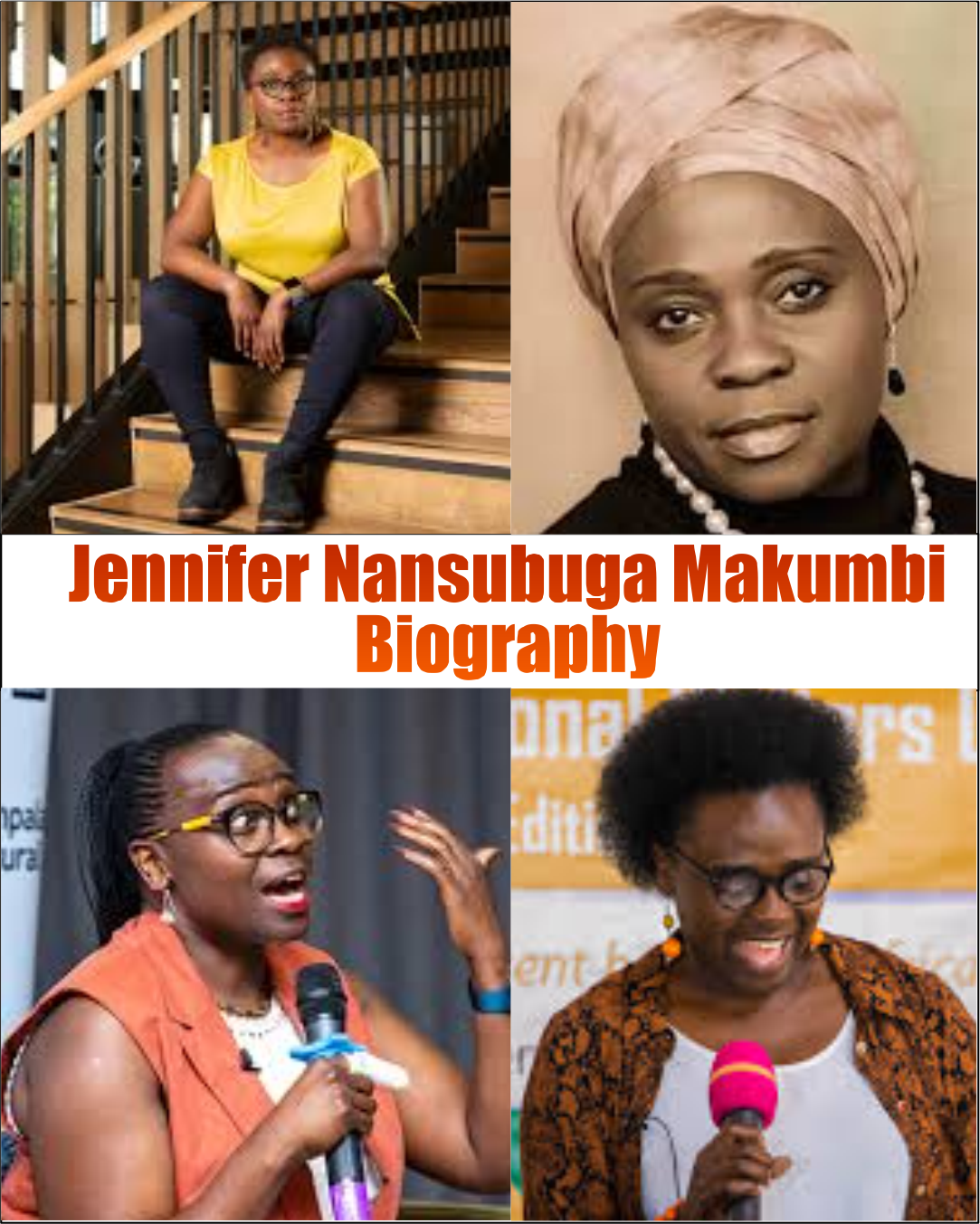
Jennifer Nansubuga Makumbi Biography
The Jennifer Nansubuga Makumbi Biography: The Storyteller Who Reclaimed Uganda’s History Through Fiction.
Discover how Jennifer Nansubuga Makumbi transformed African storytelling by reclaiming history, identity, and culture through powerful, deeply rooted novels.
History is often written by outsiders.
But what happens when someone from within decides to tell it differently?
Jennifer Nansubuga Makumbi didn’t just write stories.
She reclaimed them.
Her work challenges the way African history has been told—shifting the narrative from simplified versions to layered, lived realities that feel both personal and expansive.
And in doing so, she didn’t just gain recognition.
She changed the conversation.
Jennifer Nansubuga Makumbi Biography
| Full Name | Jennifer Nansubuga Makumbi |
|---|---|
| Date of Birth | 1967 |
| Place of Birth | Kampala, Uganda |
| Nationality | Ugandan |
| Profession | Writer, Novelist, Academic |
| Known For | Author of Kintu and Manchester Happened |
| Education | Makerere University; Lancaster University |
| Net Worth | Not publicly disclosed |
| Marital Status | Not publicly disclosed |
See also: Njeri Rionge Biography – The Serial Entrepreneur Who Quietly Built Africa Digital Future
Early Life and the Roots of Storytelling
Born in Uganda, Jennifer Nansubuga Makumbi grew up surrounded by oral storytelling traditions.
In her early environment, stories were not just entertainment—they were:
- Cultural memory
- Identity markers
- Ways of understanding the world
This foundation shaped her deeply.
Later, her academic journey took her beyond Uganda, exposing her to Western literary structures and expectations.
But instead of conforming, she did something different.
She held on to her roots.
And built her writing around them.
The Breakthrough That Redefined African Narratives
Makumbi’s breakthrough came with her novel Kintu.
At first glance, it appears to be a family saga.
But it is much more.
The novel spans generations, tracing a Ugandan family’s history from pre-colonial times to the modern era.
What makes Kintu powerful is not just its scope—but its perspective.
It tells history:
- From within
- Without simplifying
- Without filtering through external narratives
The book won the Commonwealth Short Story Prize (for an earlier story) and later received widespread critical acclaim, establishing Makumbi as a major literary voice.
Writing Style: Expansive, Cultural, Deeply Rooted
Makumbi’s writing is rich and layered.
It does not rush.
It unfolds.
Her style is:
- Expansive
- Culturally grounded
- Structurally complex
She blends:
- Oral storytelling traditions
- Historical narrative
- Contemporary literary techniques
Her work often requires patience—but rewards it with depth.
The Inspiration Behind Her Stories
Makumbi’s work is driven by a clear intention:
To tell African stories on African terms.
She draws from:
- Ugandan history
- Cultural traditions
- Generational memory
Her writing resists:
- Oversimplification
- Western framing of African narratives
Instead, she builds stories that reflect complexity—because real life is complex.
Most Recognized Works
Kintu remains her most influential work, widely regarded as a landmark in African literature.
Her later novel, The First Woman, continues this trajectory, focusing on:
- Gender roles
- Cultural expectations
- Personal identity within societal structures
Across her works, Makumbi maintains a consistent goal:
To center African voices without dilution.
Controversy and Narrative Resistance
Makumbi’s work does not create controversy in the traditional sense.
But it challenges dominant narratives.
By rejecting simplified portrayals of Africa, she:
- Pushes back against stereotypes
- Questions established literary norms
- Demands a more nuanced understanding
This form of resistance is subtle—but powerful.
Recognition and Literary Standing
Makumbi has received international recognition, including major literary prizes and fellowships.
Her work is:
- Studied academically
- Celebrated within literary circles
- Recognized for its contribution to African storytelling
Yet, she remains less commercially visible than mainstream authors.
Which aligns perfectly with your blog’s focus.
Adaptations and Media Potential
As of now, Makumbi’s works have not been widely adapted into film or television.
However, Kintu—with its multi-generational narrative—holds strong potential for long-form adaptation, such as a series.
Net Worth and Public Profile
Makumbi’s financial details are not publicly emphasized.
Her influence lies in:
- Cultural impact
- Literary contribution
- Narrative transformation
Writing Philosophy: Tell the Story Fully, Not Simply
Makumbi’s approach to writing is clear:
Stories should not be reduced to fit expectations.
She believes:
- Complexity is necessary
- Cultural context matters
- Authentic storytelling requires patience
Her work reflects a commitment to depth over accessibility.
Influence on Readers and Culture
Jennifer Nansubuga Makumbi has influenced:
- How African history is written in fiction
- The confidence of African writers to tell their own stories
- Readers seeking deeper, more authentic narratives
She represents a shift in literature:
From being explained
to being expressed.
Memorable Closing
Jennifer Nansubuga Makumbi does not simplify stories.
She expands them.
She takes history, culture, and identity—and gives them space to exist fully, without compromise.
Because some stories are not meant to be shortened.
They are meant to be understood.
And once you step into her world…
you begin to see history differently.
Frequently Asked Questions
What is Jennifer Nansubuga Makumbi known for?
Jennifer Nansubuga Makumbi is known for her novels Kintu and Manchester Happened, which explore Ugandan history, culture, and identity.
Has Jennifer Nansubuga Makumbi won any awards?
Yes, she won the Commonwealth Short Story Prize and the Windham-Campbell Literature Prize for her contributions to literature.
What themes does Jennifer Nansubuga Makumbi explore in her writing?
Her works often focus on history, tradition, colonial impact, identity, and the experiences of Ugandans both at home and in the diaspora.
Where did Jennifer Nansubuga Makumbi study?
She studied at Makerere University in Uganda and later at Lancaster University in the United Kingdom.
Is Jennifer Nansubuga Makumbi involved in teaching?
Yes, she is an academic and has taught creative writing and literature, contributing to the development of new writers.