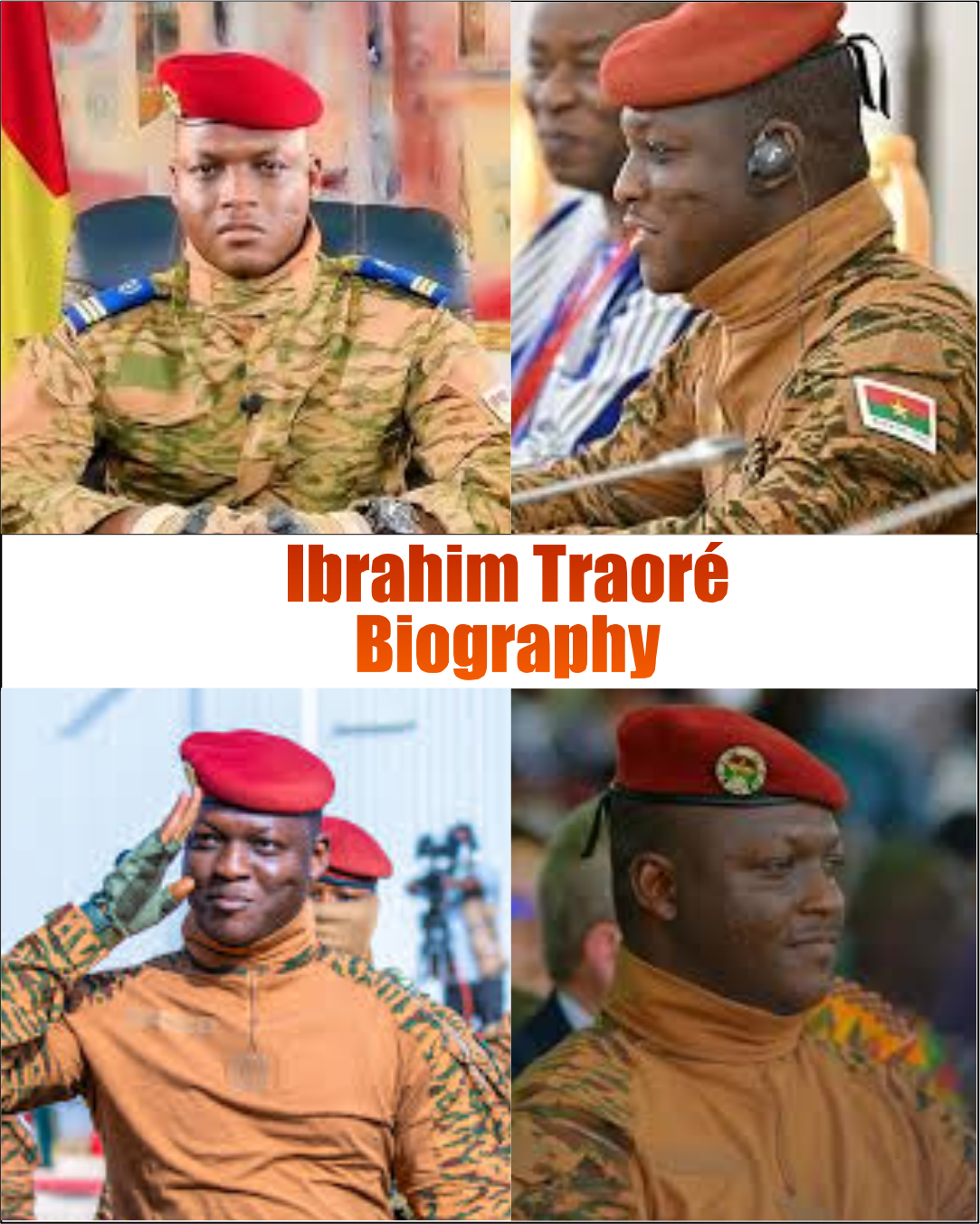
Ibrahim Traoré Biography
The Ibrahim Traoré Biography: The Young Commander Who Rose From Obscurity.
Explore Ibrahim Traoré’s rise from early military service to becoming one of Africa’s youngest leaders, marked by conflict, pressure, and national transformation.
In modern African military history, few figures have risen as quickly—or under as much pressure—as Ibrahim Traoré.
His story is not one of long-established power or inherited authority.
It is a story shaped by instability, rapid change, and a nation struggling with security crises.
And at the center of it all is a young officer who stepped into leadership at a moment when uncertainty defined everything.
Ibrahim Traoré Biography
| Full Name | Ibrahim Traoré |
|---|---|
| Date of Birth | March 14, 1988 |
| Place of Birth | Kéra, Bondokuy, Burkina Faso |
| Nationality | Burkinabé |
| Profession | Military Officer, Political Leader |
| Known For | Interim President of Burkina Faso |
| Education | University of Ouagadougou |
| Net Worth | Not publicly disclosed |
| Marital Status | Not publicly disclosed |
See also: African Military Heads that changed the world
Early Life and Enlistment Story
Ibrahim Traoré’s early life was shaped in Burkina Faso, a country that has faced recurring political transitions and security challenges.
Like many young Africans drawn into military service, his path into the armed forces was driven by a combination of national duty, regional instability, and the desire to serve in a structured institution during uncertain times.
He joined the military at a relatively young age, beginning his career in a system where discipline, hierarchy, and exposure to conflict zones quickly shaped identity and worldview.
His early training placed him within a generation of officers who would later face some of the most complex security challenges in West Africa.
Major Engagements and Operational Exposure
Traoré’s military career unfolded during a period of rising insurgency threats in the Sahel region.
He served in operations linked to counterinsurgency efforts, where forces were engaged in complex terrain, unpredictable adversaries, and shifting alliances.
These engagements were not traditional battlefield wars but asymmetric conflicts—where visibility was low and risks were constant.
His experience in these operations contributed to his reputation as an officer familiar with frontline realities rather than distant command structures.
Heroic Acts and Battlefield Stories
Within military circles, Traoré became associated with field operations requiring direct engagement in high-pressure environments.
While detailed public accounts remain limited due to operational secrecy, his service period is widely linked to missions involving stabilization efforts in conflict-affected regions.
In such environments, leadership is often measured not by speeches or rank—but by presence under fire, decision-making speed, and the ability to maintain unit cohesion under stress.
Leadership Under Pressure
Traoré’s rise to prominence was shaped by a period of national instability.
When internal military restructuring and political transitions intensified, he emerged as part of a younger generation of officers placed under immense institutional pressure.
Leadership in such contexts requires rapid judgment, balancing loyalty to command structures with the realities of national security demands.
His ascent reflects how quickly responsibility can shift in volatile political-military environments.
Psychological Struggles and Military Reality
Military service in conflict regions carries significant psychological weight.
Extended exposure to insecurity, operational stress, and national uncertainty often leaves lasting impact on officers and soldiers alike.
For Traoré’s generation, the challenge was not only external conflict but also internal strain:
- Constant redeployment
- High operational expectations
- Evolving political environments
These conditions shape decision-making and leadership style in ways that extend beyond the battlefield.
Life After Service Transition (Leadership Phase)
Rather than transitioning into a conventional post-service career, Traoré moved into a position of national leadership during a period of political restructuring in Burkina Faso.
This transition placed him in a unique position where military experience and governance responsibilities overlapped.
His role shifted from tactical operations to broader questions of national stability, security strategy, and institutional direction.
Recognition, Position, and National Attention
Traoré’s rise brought him into national and regional attention due to:
- His age relative to leadership position
- The timing of his emergence during political transition
- His association with military restructuring phases
In contexts like Burkina Faso, such figures often become symbolic representations of broader institutional change.
Legacy and National Recognition
Traoré’s legacy is still unfolding.
He is part of a new generation of West African military figures whose careers are tied not only to battlefield operations but also to governance transitions.
His presence reflects broader themes in regional history:
- Youth involvement in leadership structures
- Military influence in political transitions
- Security-driven governance models
His long-term legacy will depend on how stability, governance, and security evolve in Burkina Faso in the coming years.
Untold Stories and Historical Gaps
Like many military figures in active or recent service, much of Traoré’s operational history remains undocumented in public sources.
This creates a gap between:
- Public perception
- Institutional records
- Personal experiences
Such gaps are common in military histories, especially in regions where security operations remain sensitive.
What remains clear, however, is that his rise is tightly connected to a period of intense national transformation.
Memorable Closing
Ibrahim Traoré’s story is still being written.
It is not a finished biography—it is an ongoing chapter in a nation’s evolving history.
From early military service to national leadership under extraordinary circumstances, his journey reflects the unpredictability of modern West African military and political life.
And like many figures shaped by conflict and transition, his true legacy will only be understood with time.
Frequently Asked Questions
What position does Ibrahim Traoré hold?
Ibrahim Traoré serves as the interim President of Burkina Faso after taking power in 2022 following a military coup.
When did Ibrahim Traoré become president?
Ibrahim Traoré assumed leadership of Burkina Faso in September 2022 after leading a coup that removed the previous interim government.
What is Ibrahim Traoré’s background?
Ibrahim Traoré is a military officer who rose through the ranks of the Burkinabé army and became known for his role in counterinsurgency operations before entering politics.
What challenges has Ibrahim Traoré faced as leader?
Ibrahim Traoré has faced major challenges including security threats from insurgent groups, political instability, and economic pressures within Burkina Faso.
What is Ibrahim Traoré’s leadership style?
Ibrahim Traoré is often described as a decisive and military-driven leader, focusing on national security and sovereignty as key priorities of his administration.